Pillar: Documents and contract
Can I buy property in Spain without being there? Power of attorney and remote signing
On this page
Yes. Someone you appoint signs for you under a power of attorney granted before a Spanish consul, before a notary at home (with an apostille if your country is party to the Hague Convention; if not, legalised) or, for that specific purchase, by video call with a Spanish notary (Notaries Act, article 17 ter). The sale itself cannot be signed by video call.

In 2025 foreigners bought 13.82 % of the homes sold in Spain, according to the Colegio de Registradores (the association of land registrars), and many of them live abroad and cannot fly in for the signing. The power of attorney, a "poder notarial", is what lets someone else sign for you. The risk is lower when it is written for this purchase, with limits, and the Spanish notary has seen the draft before you sign it.
Your NIE (foreigner's tax number), bank account and non-resident tax are covered in the guide for the foreign buyer and the NIE; what the notary checks at completion, in the guide to the notary's role.
Three ways to grant the power without travelling
Each route produces the same thing: a public document that lets another person sign the purchase deed in your name. The Civil Code requires a public document for a power whose purpose is an act that must be done by public deed (article 1280.5), and buying property is such an act (article 1280.1). A letter or a private document with a witnessed signature does not meet that requirement.
| Route | Where you sign | What comes next | Limit | Law |
|---|---|---|---|---|
| A. Spanish consul | At the consulate or embassy, in person, with a valid passport | Send the copy to your attorney | Appointment rules vary; some consulates serve only residents of their district | Notarial Regulations, annex III, article 1 |
| B. Notary at home | At a local notary, in that country's form | Apostille from the issuing country if it is a Hague Convention party; otherwise legalisation. A translation. Check the requirements with the Spanish notary first | The Spanish notary assesses its form and authority | Hague Convention, articles 1 and 3; Mortgage Regulations, article 36; Civil Code, article 11 |
| C. Video call | On the notaries' electronic platform, before a Spanish notary | Nothing: the notary signs with a qualified e-signature | Only powers for specific acts; not general or lasting powers | Notaries Act, article 17 ter |
The Hague Convention does not apply to documents issued by diplomatic or consular agents (article 1), so the apostille or legalisation belongs to route B. Sources: Notarial Regulations (BOE); Hague Convention of 1961 (BOE); Notaries Act (BOE). Accessed 12 November 2026.
A power signed at a Spanish consulate
Heads of diplomatic missions and career consuls act as public notaries for Spain abroad; where a city has both an embassy and a consulate, the consulate does it (Notarial Regulations, annex III, article 1). Spanish law governs what they authorise (Civil Code, article 11.3).
The Spanish Embassy in Berlin says you must appear in person and the fee depends on the length, the number of grantors and the copies. The Consulate General in Bordeaux serves residents of its district and gives an indicative total of €25 to €60. The London consulate warns that powers granted there are not valid in the United Kingdom.
A power signed before a notary at home
A power signed before a foreign notary can work in Spain. The form of the act follows the law of the country where it is signed (Civil Code, article 11.1). To be accepted as authentic in Spain it needs legalisation and the other authenticity requirements, and compliance with the foreign formalities can be shown by, among other means, a report from a Spanish notary or consul (Mortgage Regulations, article 36).
If your country is a party to the 1961 Hague Convention, the only formality that may be required to certify the signature and seal is the apostille, issued by the competent authority of the country the document comes from (article 3). It goes on the document itself or on an attached sheet (article 4), and you or anyone holding the document may ask for it (article 5). If your country is not a party, the power needs the legalisation required for it to be authentic in Spain (Mortgage Regulations, article 36): ask the Spanish notary which step they need.
In the United Kingdom, the FCDO Legalisation Office attaches the apostille. GOV.UK lists a power of attorney certified by a UK notary or solicitor among the documents it can legalise. The paper apostille costs £45 per document plus courier or postage and usually takes up to 25 working days, plus delivery time; the e-Apostille costs £35 and takes up to 2 working days, for PDFs electronically signed by a UK notary or solicitor, and only if the Spanish notary accepts it. GOV.UK warns that both may take longer. The Spanish consulate in London confirms that a power granted before a British notary for use only in Spain must carry the Hague apostille.
If the power is not in Spanish, plan for a translation. For the Land Registry, the Oficina de Interpretación de Lenguas (the Foreign Ministry's translation office), authorised officials or a notary may translate it (Mortgage Regulations, article 37), and a notary who knows the language may translate it themselves (Notarial Regulations, article 150).
By video call with a Spanish notary
Since 9 November 2023 the Notaries Act allows a closed list of acts to be signed by video call. It includes powers for specific acts and revoking powers, except general lasting powers. General and lasting powers (the Spanish "poder preventivo", similar to a lasting power of attorney) cannot be authorised this way (article 17 ter.1.c and d).
You log in to the notaries' electronic platform with one of the electronic identification systems in article 9 of Law 39/2015. The notary shows you the document on screen so you can read it and advises you on its content; if you have no e-signature, you can be given one free of charge, limited to that document (article 17 ter.2 to 4). Ask the notary whether your country's electronic ID is accepted.
The purchase of a property is not on that list. Your attorney signs it in front of the notary, or you do if you travel.
What the power must say
The completion notary records the original power in the deed and states that, in their judgement, the authority is enough for that act; that statement is sufficient proof on its own, on the notary's responsibility (Law 24/2001, article 98; Notarial Regulations, article 166). That is why the draft goes to them before you sign, and why the original or an authorised copy, not a photocopy, is produced on the day.
A mandate in general terms covers only acts of management; selling, mortgaging or any other act of ownership needs an express mandate (Civil Code, article 1713). If you will take out a Spanish mortgage, the power must say so. Your attorney may not go beyond the mandate (article 1714). Have the text name:
- the property, by its cadastral reference and Land Registry details;
- the maximum price, the deposit already paid and how the balance is paid;
- whether a mortgage may be signed, and within what limits;
- whether the attorney may apply for your NIE, open or use a bank account and pay taxes and costs;
- the date after which the power should no longer be used.
One attorney with a wide power is the biggest risk. What the attorney does without knowing the power has been revoked still binds you towards third parties acting in good faith (Civil Code, article 1738), and if the power was given to deal with particular people, a revocation does not affect them until they are told (article 1734). Revoke by deed, also at a Spanish consulate, and tell the notary. For a purchase power, choose a person or a lawyer who works for you, not for the estate agency or the seller.
The money: means of payment and source of funds
The purchase deed identifies the means of payment: whether the price was paid before or at signing, how much, and whether in cash, by cheque or by bank transfer (Notaries Act, article 24). Notaries, banks and lawyers are bound by Law 10/2010 (article 2.1): they identify everyone involved (article 3) and the beneficial owner (article 4), who is you when an attorney signs for you. So prepare the proof of where the money comes from in your own name: a house sale in Dublin, an inheritance, savings statements. What you may be asked for, and when cash is banned, is covered in paying for a purchase in cash.
Cash at the border and non-resident sellers
If you carry €10,000 or more in notes, bearer cheques or other bearer instruments into or out of Spain, you must file a declaration beforehand (Law 10/2010, article 34). If the seller is also non-resident, you withhold part of the price; see the guide to the 3 % withholding.
What you can check without travelling
You can order the nota simple on the Registradores website without registering, by stating a legitimate interest. It costs €9.02 per property, taxes and withholdings not included; an English translation can be ordered for €30 plus tax. It arrives by email as a PDF. How to read it: the guide to the nota simple.
The cadastral reference and the property's details are in the Catastro's online property search (Sede Electrónica).
A buyer in Manchester who does not fly out
She signs a power before an English notary to buy one specific house and orders a paper apostille from the UK Legalisation Office: £45 plus delivery, usually within 25 working days plus delivery time. Earlier she ordered two notas simples, for the house and the adjoining plot: 2 × €9.02 = €18.04 plus tax.
What to do, in order
- Check the property remotely (Registradores and Catastro websites, you): a nota simple (land registry extract) at €9.02 per property plus tax, sent by email, and the free cadastral search. Time: a few minutes to order; no set delivery time for the nota.
- Choose an attorney and a lawyer who act in Spain (you, remotely): a written quote before you instruct anyone. Time: no set time; decide before you pay the deposit.
- Ask the Spanish notary for the draft power (completion notary, by email): confirmation that the authority is enough, which translation they accept and whether they accept an e-Apostille. Time: no set time; ask the notary's timing and fees.
- Sign the power by one of the three routes: a consulate (fee; one appointment, when the consulate's diary allows); a notary at home plus an apostille if your country is a Hague Convention party, or legalisation if not (UK costs and times above); or a video call if it is a power for that specific purchase (the notary's fee, in one session).
- Send the original or authorised copy to your attorney in time for the notary to see it before completion: international courier, a few days.
- Line up the payments (you and your bank): traceable transfers in your name and proof of the source of funds. Time: no set time; have them ready before the deed.
- The Spanish notary has seen the draft and raises no objection.
- The power names the property, the maximum price and whether a mortgage is allowed.
- You know which translation the notary accepts and who will do it.
- You have a recent nota simple for each property.
- You know how and to whom you would give notice of a revocation.
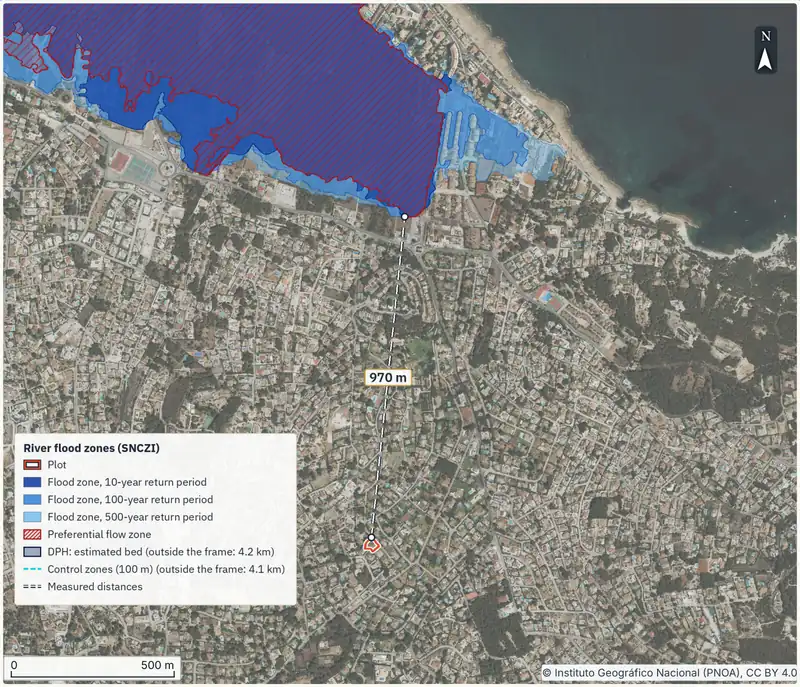
Before you sign the power, you can order the plot report from home with the cadastral reference and give the notary the property's details.
Common questions
Can I sign the purchase deed itself by video call?
No. The list in article 17 ter of the Notaries Act does not include the sale of property. It does include powers for specific acts, such as a power to sign that purchase, but not general or lasting powers.
Does a power signed at a Spanish consulate need an apostille?
The Hague Convention does not apply to documents issued by diplomatic or consular agents (article 1). The consul acts as a Spanish public notary (Notarial Regulations, annex III, article 1), so the consular power is simply sent to your attorney.
Will a general power I already signed at home work?
It can, if it carries an apostille (or legalisation, if your country is not a Hague Convention party) and a translation the notary accepts, and if the Spanish notary finds its authority enough for this purchase (Law 24/2001, article 98). Mortgaging needs an express mandate (Civil Code, article 1713). Send a copy first.
Do I need a Spanish bank account?
None of the rules we read requires one for the purchase. What the deed records is each means of payment (Notaries Act, article 24), and the bank that makes the payment must identify you as the beneficial owner (Law 10/2010, article 4).
How do I revoke the power if I change my mind?
By a deed of revocation before a notary or at a Spanish consulate, even if the power was granted elsewhere. You may revoke at will (Civil Code, article 1733). Tell your attorney, the completion notary and anyone due to deal with them (article 1734).
Keep reading
Check this on your own plot
Pin the plot on the map and confirm the cadastral reference: the report gathers the public data and official maps for it, each with its source and date. It does not replace the land registry extract, the notary or a tax adviser. €29 VAT included.