Pillar: Planning and buildings
What is the difference between consolidated and non-consolidated urban land when buying a plot?
On this page
It depends on the region: national law does not use these categories and Andalusia dropped them with its Ley 7/2021. Where they exist, as in Madrid, Catalonia and Castile and León, consolidated urban land is, in essence, serviced building plots plus plots that only need their servicing completed. On non-consolidated land in Madrid, owners pay for all the servicing and hand the town land for 10% of the area's buildable floor space (Ley 9/2001, art. 18.2).
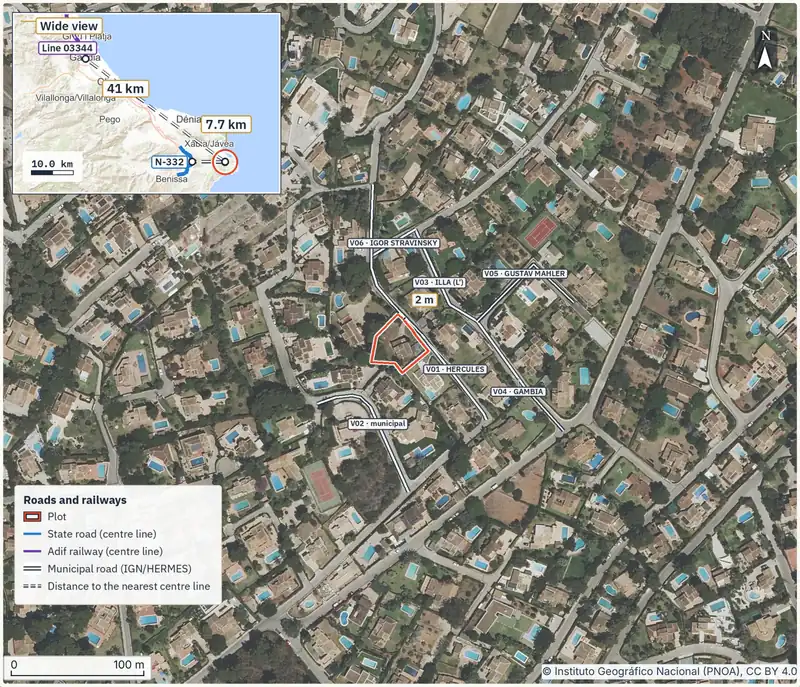

A listing that says "terreno urbano" (urban land) does not tell you whether you can apply for a building licence. Some urban plots are ready to build on and others sit inside an area that still has to be planned and serviced. The legal name for that difference changes from one "comunidad autónoma" (region) to the next, because planning law in Spain is regional. The town plan decides the category of each plot.
The three classes of land are covered in the guide to rustic, urban and developable land. This one deals only with the split inside urban land.
What national law says and what each region adds
The national land law (RDLeg 7/2015) does not classify land. It defines two basic situations. Land counts as urbanised when it is lawfully part of an urban street grid and, in addition, has been serviced under the plan, has the necessary services installed and working or can get them with nothing more than connection works, or is built up to the percentage set by the regional law (art. 21.3).
The same law separates urban transformation schemes (new servicing of land, the reform or renewal of an area's servicing, and schemes to add public facilities; art. 7.1) from building projects, which stay building projects even when they need complementary servicing works (art. 7.2). The regional categories of urban land follow that line under other names.
Five laws compared
| Territory and law | Categories of urban land | What it means for a buyer |
|---|---|---|
| Spain: RDLeg 7/2015, arts. 7, 18 and 21 (25.5.2023) | None: only the situations of rural land and urbanised land (art. 21.1) | Servicing schemes oblige owners to hand over the land for public facilities and the share of buildable floor space set by the regional law (as a general rule, between 5% and 15%; exceptionally, less or up to 20%), and to pay for the works (art. 18.1) |
| Madrid: Ley 9/2001, arts. 14 and 17 to 20 (15.6.2026) | Consolidated and non-consolidated; the general plan draws them ‘where appropriate’ (art. 14.2) | Consolidated: building on a plot that is not yet a ‘solar’ requires undertaking to service it at the same time, not occupying the building until the works end, and a guarantee (art. 19.3). Non-consolidated: the town receives, as serviced plots, the land for 10% of the area's buildable floor space, and owners pay for all the servicing (art. 18.2) |
| Catalonia: DLeg 1/2010, arts. 29 to 31 and 41 to 44 (3.7.2026) | Consolidated (art. 30) and non-consolidated, which is the rest of urban land (art. 31.1) | A ‘solar’ can be licensed immediately (art. 29.c). On non-consolidated land, within the sectors and ‘polígonos’ of art. 43.1: owners hand over the land for 10% of the building rights (‘aprovechamiento urbanístico’), with the exceptions in that article |
| Castile and León: Ley 5/1999, arts. 12, 17, 20 and 22 (5.12.2025) | Consolidated and non-consolidated; the general plan ‘may distinguish’ them (art. 12.1) | Consolidated: the plot's actual building rights, unless a revision or amendment of the plan increases them (art. 17.2.a), and only the works needed to complete services and regularise streets (art. 20.c). Non-consolidated: 90% of the sector's average building rights as the general rule (art. 17.2.b) |
| Andalusia: Ley 7/2021, arts. 12, 13, 24 and 30 (7.4.2026) | None: land is classified as urban or rustic (art. 12) | Urban land can be subject to urban improvement or interior reform schemes (art. 24.1.a). Interior reform: owners hand over 10% of the increase in building rights on the terms of art. 30.a and pay for all the works in the area (art. 30.c) |
In brackets, the date of the last published update of the consolidated text in the BOE (the official gazette), read on 12.11.2026. The right-hand column summarises one article: the full conditions are in the provision cited. Sources: RDLeg 7/2015; Madrid, Ley 9/2001; Catalonia, DLeg 1/2010; Castile and León, Ley 5/1999; Andalusia, Ley 7/2021. Accessed 12 November 2026.
Three questions before applying for a licence
Consolidated: a serviced plot, or nearly
A "solar" is a plot serviced to the standard the law requires for building, and its definition is regional too. Catalonia asks for four things: servicing in line with the plan or, where the plan does not specify it, basic services and frontage on a paved, lit street; alignments and levels marked if the plan defines them; not being inside a sector or "polígono" awaiting development; and no land still to be handed over for streets (DLeg 1/2010, art. 29). Andalusia's minimum (Ley 7/2021, art. 13.3) is in the guide to what you can build.
Consolidated does not mean ready to build. In Catalonia the category also covers land that only lacks marked alignments or levels, or finished servicing (art. 30.b), and the owner must finish it at their own cost (art. 42.2). In Madrid the plot is charged with carrying out and paying for the remaining works, including, where it applies, handing over free of charge the strip set aside for the road (Ley 9/2001, art. 19.1).
Non-consolidated: area-wide procedures first
On non-consolidated urban land in Madrid that has no detailed plan yet, the only things allowed are public infrastructure and service works, temporary uses and structures, which are demolished without compensation when the authority so decides, and maintenance of what exists (art. 20.1). Once the scheme has been carried out, the land becomes consolidated urban land (art. 18.3).
In Catalonia, consolidated land becomes non-consolidated when the general plan subjects it to urban transformation schemes ("actuaciones de transformación urbanística") in a sector covered by an urban improvement plan or in a "polígono de actuación", or when, under the new plan, it no longer has marked alignments and levels or must hand over road land before building (art. 31.2, with art. 29.b and d). Being inside a "polígono" is not enough: land that only lacks alignments, levels or finished servicing stays consolidated even if the plan has put it in a "polígono" or sector for that purpose (art. 30.b). Where non-consolidated land is in no action area at all, the owner only hands over, before building, the land for streets needed for the plot to become a "solar" (art. 44.2).
Castile and León: the building rights the owner keeps
Castile and León sets by law the share of building rights ("aprovechamiento") that belongs to the owner, according to the class of land.
A 1,000 m² plot in a non-consolidated sector in Castile and León
Assume the sector's average building rights are 0.50 m² of floor space per m² of land. Under the general rule the owner gets 1,000 × 0.50 × 90% = 450 m² of floor space; the remaining 50 m² belong to the acting authority (arts. 17.2.b and 20.b). If servicing the sector cost €800,000 and the reallocation project ("proyecto de reparcelación") gave that plot 5% of the costs, that is €40,000 on top of the purchase price. Both figures are assumed: the real ones are in the planning documents and in the reallocation project.
How the levies are charged, what a "junta de compensación" (owners' development body) is and how the charge shows at the Land Registry is explained, with a real case, in the guide to plots on developable land and urbanisation costs.
Andalusia: no categories, schemes instead
The preamble to Ley 7/2021 states that developable land and the division of urban land into consolidated and non-consolidated both disappear. On urban land, change comes through urban improvement and interior reform schemes (art. 24.1.a), and a plot stops being a "solar" when it is brought into an urban transformation scheme (art. 13.4.b).
A town plan older than the law may still use the previous names. The first transitional provision deals with that: areas the plan in force labels non-consolidated urban land follow the rules of this law for urban transformation schemes delimited on urban land or, where applicable, those for "actuaciones urbanísticas".
What the buyer inherits
A sale does not change the planning duties attached to the land: the new owner takes over the previous owner's rights and duties (RDLeg 7/2015, art. 27.1). Land included in a scheme also stands as security for meeting those duties (art. 18.6).
If the land is subject to a transformation scheme, the deed of sale must state the legal duties and the obligations still pending (art. 27.2.b). If someone signs for you under a power of attorney, ask them to check that the deed lists them. Leaving them out entitles the buyer to rescind the contract within four years and claim damages under civil law (art. 27.3). The article does not say from which day that period runs: ask your lawyer.
Which tax applies to buying a plot is explained in the guide to VAT or ITP on a land purchase.
What the category does not settle
Limits of this guide. The table covers five laws; the other regions have their own, and a town plan older than the law in force may use other names. No category replaces the town hall's written answer.
How to check, in order
- Find the plot on the plan. Use the town hall's planning viewer or the SIU viewer, online, in a few minutes. Note the class, the category and whether the plot falls inside a delimited area.
- Read the area's sheet in the general plan (town website or its planning department, "Urbanismo"): how the scheme is run, land to be handed over and progress of the servicing.
- Request the planning certificate ("cédula" or "informe urbanístico") at the town hall's register or online office, for the fee in its tax by-law; your lawyer can file it for you. In Catalonia it is issued within one month of the request being filed at the town hall's general register (art. 105.1); for other regions, see the guide to the planning certificate. Ask whether the plot is a "solar", what is missing and which duties are pending.
- Get a nota simple, the Land Registry extract, and look for planning charges.
- Ask the seller for receipts of the urbanisation levies and a statement of balance from whoever runs the area, the owners' body or the town hall.
- Put the result into the deposit contract ("arras"): money back if the town hall's answer does not confirm what was advertised, and an express split of pending levies.
- You know which regional law applies and which category the plan in force gives the plot.
- The town hall has said in writing whether it is a "solar" and, if not, what is missing.
- You know whether the plot is in an execution unit, "polígono", sector or transformation scheme.
- Pending urbanisation levies, and who pays them, are written into the contract.
Before booking a slot at the planning department, you can order the report for the plot by its cadastral reference and arrive with the land class and the constraints on official maps already identified.
Common questions
Can you build on non-consolidated urban land?
It depends on the regional law and on how far the area has got. In Madrid, as a general rule nothing is built before the servicing works end, although building tied to the simultaneous completion of the servicing next to the plot may be authorised (Ley 9/2001, art. 20.3). In Catalonia, if the land needs reallocation ("reparcelación"), it must have been approved by a decision that is final in administrative proceedings (DLeg 1/2010, art. 41.2).
Does consolidated urban land mean I can apply for a licence straight away?
Not always. In Madrid and in Catalonia the category includes plots that still need works to become a "solar" (Ley 9/2001, art. 14.2.a; DLeg 1/2010, art. 30.b). The owner pays for those works and, to build at the same time, the law requires a guarantee.
What exactly is a "solar"?
Each regional law defines it and the plan completes it. In Castile and León it is lawfully divided consolidated urban land, serviced in line with the plan, with access by a paved road in public use and ownership, drinking water, sewerage, electricity, street lighting and any other services the plan requires (Ley 5/1999, art. 22.1).
Who pays outstanding urbanisation levies if I buy?
The buyer becomes answerable to the authority for the seller's planning duties (RDLeg 7/2015, art. 27.1), and land within a scheme stands as security for meeting them (art. 18.6). How buyer and seller share them is whatever the contract says.
Does non-consolidated urban land still exist in Andalusia?
Not as a legal category: Ley 7/2021 classifies land as urban or rustic (art. 12). Areas that the plan in force still calls that follow the rules for urban transformation schemes delimited on urban land or, where applicable, those for "actuaciones urbanísticas" (first transitional provision).
Keep reading
Check this on your own plot
Pin the plot on the map and confirm the cadastral reference: the report gathers the public data and official maps for it, each with its source and date. It does not replace the land registry extract, the notary or a tax adviser. €29 VAT included.