Pillar: Documents and contract
Do I need military authorisation to buy a house in Spain if I am not from the EU?
On this page
Yes, if the property lies in a restricted-access zone (every island and six mainland zones) and is not urbanised land in a municipality away from the border. You apply to the Minister of Defence, and the notary will not sign the deed without it (Law 8/1975, arts. 18 and 20). Ceuta and Melilla have their own regime. Individuals with the nationality of an EU member state are exempt, save under art. 24.
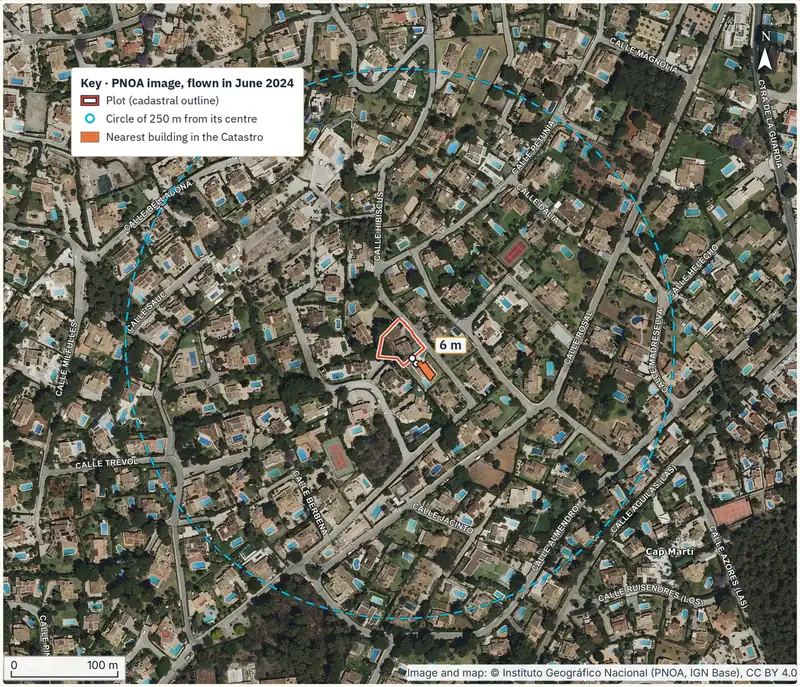

A 1975 defence law still requires military authorisation when foreigners buy property in parts of Spain. Since 1 January 2021 that includes British buyers: the UK left the EU on 31 January 2020, and the transition period, when EU law still applied, ended on 31 December 2020. The Regulation allows up to four months for a decision: check before you pay a deposit.
The NIE (foreigner's tax identification number) and other paperwork are covered in the guide to the NIE.
Who needs it
Inside the restricted-access zones of Law 8/1975, a foreigner needs authorisation to buy rustic or urban property, to carry out building works, and whenever a mortgage, easement or other right in rem (a property right over land other than ownership) is created, transferred or changed in a foreigner's favour, such as a mortgage granted to a foreign lender (art. 18).
The same applies to a Spanish company where non-EU foreigners hold more than 50 % of the capital or control the management (art. 19), so a Spanish SL you control does not avoid it.
The additional provision exempts individuals with the nationality of an EU member state, except those to whom art. 24 was applied (review for use against defence interests). EU companies are treated like Spanish ones (art. 19). Nationality counts, not residence: a US citizen who has lived in Spain for twenty years is still a non-EU buyer.
British buyers after Brexit
In 2023 the Directorate-General for Legal Certainty and Public Faith (DGSJFP, the Ministry of Justice body that hears appeals against registrars) upheld the Tui Land Registry ("Registro de la Propiedad") in refusing to register a house in A Guarda bought partly by a British husband: the UK is a third country, and the exemption requires member-state nationality, "que ya no concurre en los ciudadanos británicos" (no longer held by British citizens) (ruling of 25.5.2023).
Where the zones are
The Regulation (RD 689/1978) makes every island and islet a restricted zone, together with six mainland zones described in its annex II (Cartagena, the Strait of Gibraltar, the Bay of Cádiz, the Portuguese border, Galicia and the French border) and the Spanish territories in North Africa (art. 32). The Government can redraw them by decree (art. 32.2). Each zone has a cap on the foreign-owned area, never above 15 % (Law 8/1975, art. 16), counted by island and by municipality (Regulation, art. 33.2).
The Regulation describes the zones in words, not with a map. An order of 21 October 1983 listed the affected municipalities by land registry district and placed a plan of each municipality in its Land Registry, open to the public (arts. 4 and 5). Also ask the town hall for a planning certificate stating any defence restrictions, which notaries and registrars must require (Regulation, art. 40.2).
The Balearic and Canary Islands lie wholly inside; see also rustic land in the Balearics.
Urbanised land away from the border
The law leaves out the urban centres of towns not on a border, with their built-up and expansion areas (art. 16). A border town is one in a municipality adjoining a frontier (Regulation, art. 35.5), and if the municipality borders another country, every settlement in it is caught (ruling of 25.5.2023).
Service Order 1/2021 of the Defence Ministry's Directorate-General for Infrastructure lifts the requirement for land in the "urbanised" situation under art. 21.3 and 21.4 of the national Land Law, but not for border towns or rustic land. We cite it as the DGSJFP rulings describe it. What counts as urbanised: consolidated and non-consolidated urban land.
In Cotobade (Pontevedra) a Brazilian buyer acquired a plot shown as urban by the Catastro (Spain's property survey and tax register) but as rustic by the Land Registry and the town hall. The DGSJFP upheld the refusal to register: the Catastro classification is not enough without a town hall certificate of urbanised land. On rustic land it must be obtained "con carácter previo al otorgamiento" (before signing), and the defect cannot be cured later (ruling of 27.11.2025, BOE 9.3.2026).
What needs authorisation
| Situation | Military authorisation? | Rule |
|---|---|---|
| Non-EU buyer, rustic land on an island or in a mainland zone | Yes, before the deed | Law 8/1975, arts. 18 and 20 |
| Non-EU buyer, urbanised land in a municipality not on a border | No, if a town hall certificate proves it | Law 8/1975, art. 16; ruling of 27.11.2025 |
| Non-EU buyer, any property in a border municipality inside a zone | Yes | Ruling of 25.5.2023 |
| Individual with the nationality of an EU member state | No, unless art. 24 was applied | Additional provision |
| Spanish company over 50 % non-EU owned or controlled by non-EU partners | Yes, in the same cases | Law 8/1975, art. 19 |
| Centres and zones of national tourist interest | Treated as granted, subject to any defence limits set | Law 8/1975, art. 18 |
| Property in Ceuta or Melilla, any nationality, Spanish included | Authorisation from the Government Delegate (the central government's representative); for a foreign buyer, after a defence report within one month | Regulation, final provision 1 |
Consolidated texts: Law 8/1975 (28.12.1990) and RD 689/1978 (15.4.1989). Exclusion of urbanised land: DGSJFP rulings. Sources: Ley 8/1975 (BOE); RD 689/1978 (BOE); DGSJFP ruling of 27.11.2025. Accessed 12 November 2026.
Security zones around military sites
This binds every owner, whatever their nationality. Around each military installation a near zone, generally 300 metres wide, needs the Minister's authorisation for any works, and a far zone needs it for planting and buildings (Law 8/1975, arts. 8, 9 and 11). The town hall is told the boundary (art. 14).
How to apply
You file a written request to the Minister of Defence giving your nationality, personal details and how long and where you have stayed in Spain (Regulation, art. 79.1), in duplicate (arts. 60.3 and 81.1), with:
- a copy of your passport and, if you have one, your residence card;
- a certificate of good conduct and criminal record from the authority where you live;
- a location sketch at 1:5,000 to 1:25,000 and a plan of the property at 1:500 or larger, plus the project for building works;
- Spanish translations of foreign documents, legalised (art. 79.3).
A company adds its incorporation deed and a certificate of foreign shareholdings (art. 80). For plots up to 2,000 m² the Minister may delegate the decision, unless, with what you already own, you would exceed that area (art. 82).
The report goes up within two months at most and the Minister decides "dentro del plazo de otros dos meses", within two more months (art. 81). That chapter does not say what happens if no answer arrives in time and, for anything it does not cover, refers to Decree 1408/1966 (art. 87). Neither the law nor that chapter sets a fee. The text still names 1978 bodies, so ask the notary or the Defence Ministry where to file today.
Notary and Land Registry
The notary requires the authorisation before the deed and the registrar before registration (Law 8/1975, art. 20). The purchase must be registered: if not registered within eighteen months of the deed, it is void, and the notary warns you of this in the deed. The period is twenty-four months where, through no fault of the buyer, the transfer tax or another formality is pending (art. 21). See what a Spanish notary does.
Buying without authorisation
Breaches of arts. 18 and 19 can lead to partial or total demolition or to expropriation, as well as a fine (art. 29). The consolidated text states fines in pesetas: up to 2,500,000 by the military authorities, up to 10,000,000 by the Minister and up to 50,000,000 by the Council of Ministers (art. 30).
Inheritance and lost nationality
An heir must apply within three months or sell within one year, both from when they could lawfully act as owner; after a year without a sale, or a year from a refusal, the Ministry may expropriate (Law 8/1975, art. 25). The same periods apply to someone who loses Spanish nationality (Regulation, art. 46.3). See also inherited property.
An American heir in Menorca
A US citizen inherits a rustic farm in Menorca and can act as owner from 1 March 2027. She has until 1 June 2027 to apply or until 1 March 2028 to sell. If authorisation is refused on 1 October 2027, her year to sell runs from that date.
What to do, in order
- Check whether the property is in a zone: ask its Land Registry for the municipal plan. You or your lawyer; the law sets no deadline for the reply.
- Ask the town hall for a planning certificate with the land class and defence restrictions (art. 40.2). Fee and timing depend on the town hall's bylaws.
- Sign the deposit contract with a condition: full refund if authorisation is refused or not granted by a set date. See arras deposit contracts. The law sets no deadline.
- File the application with the art. 79 documents, translated and legalised: up to two months for the report and two more for the decision.
- Bring the authorisation to the notary on completion day, also if an attorney signs for you (buying with a power of attorney). The law sets no general deadline, but the authorisation sets one from its date; if you do not complete within it and do not justify the delay in time, or the authority rejects your reasons, it lapses (Regulation, art. 86). Check that deadline and its conditions before fixing the completion date.
- Follow the registration: eighteen months from the deed, twenty-four if the delay is not your fault (art. 21).
- You know whether your nationality exempts you (an EU member state, as an individual).
- The Land Registry has confirmed whether the municipality is in a zone and on a border.
- You have a town hall certificate with the land class and any defence restrictions.
- The deposit contract refunds you if authorisation is refused or does not arrive.
- The planned completion date falls within the deadline set in the authorisation, and you meet its conditions (art. 86).
Limits of this guide. We read the BOE consolidated texts of 1990 (Law) and 1989 (Regulation), and Service Order 1/2021 only as the DGSJFP rulings describe it. A decree redrawing a zone prevails. Confirm your case with the notary.
With the plot report to hand, you can go to the Land Registry and the town hall with the municipality, cadastral reference and land class already identified.
Common questions
I am British and buying a flat in a city: do I need authorisation?
It depends on where it is. Outside the zones in art. 32 of the Regulation, no. Inside a zone, urbanised land in a municipality not on a border is excluded if a town hall certificate proves it (DGSJFP ruling of 27.11.2025); in a border municipality you do need it (ruling of 25.5.2023).
What if I buy on an island?
Every island and islet is a restricted zone (Regulation, art. 32). Rustic land in Mallorca, Tenerife or Ibiza needs authorisation if you are not a national of an EU member state. On islands smaller than Formentera the foreign ownership cap is 0 %.
How long does authorisation take?
The Regulation allows up to two months for the report and two more for the Minister's decision (art. 81). It does not say what happens if the time runs out without an answer: without written authorisation, the notary will not authorise the deed.
Can I buy through a Spanish company?
Yes. If non-EU foreigners hold more than 50 % of the capital or control the management, the company needs the same authorisation in the same cases and zones (Law 8/1975, art. 19). If not, that requirement does not apply to it.
What if I inherit property in a restricted zone?
You must apply within three months or sell within one year, from when you could act as owner. If you do not sell within a year, or within a year of a refusal, the Ministry may expropriate (art. 25).
Does renting need authorisation?
Art. 18 lists ownership, rights in rem over property and building works; a lease is not on that list. If the contract gives you a right in rem, ask the notary.
Keep reading
Check this on your own plot
Pin the plot on the map and confirm the cadastral reference: the report gathers the public data and official maps for it, each with its source and date. It does not replace the land registry extract, the notary or a tax adviser. €29 VAT included.